Introduction: advancing material characterization in steel and metallurgy research
How do you accurately detect subtle thermal transitions in newly developed steel and metal-based materials?
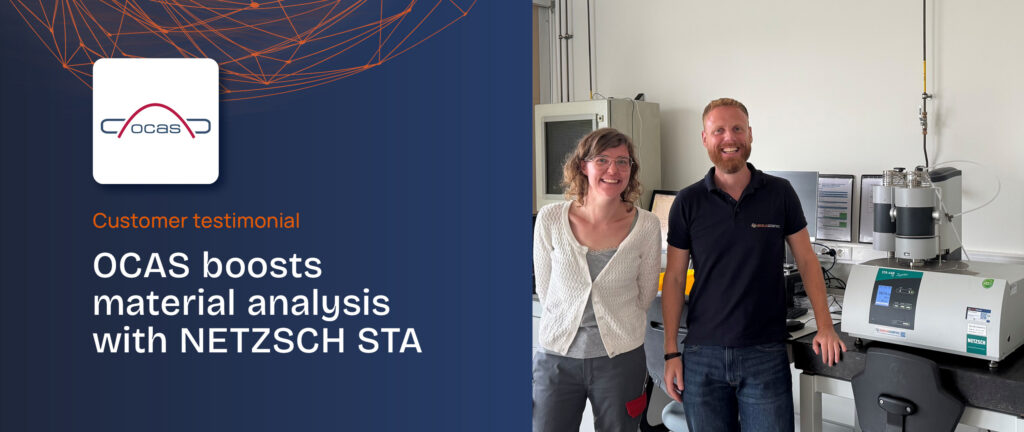
For OCAS, a leading research centre in metallurgy and steel applications, advanced thermal analysis is essential to support high-level R&D projects. To further enhance their material characterization capabilities, OCAS invested in a highly sensitive NETZSCH STA system via Benelux Scientific.
This customer testimonial explains the challenge, the solution, and the impact of implementing simultaneous thermal analysis (STA) for research-driven material development.
About OCAS: a leading research center in steel and metal applications
OCAS (Research Centre for the Application of Steel) is a market-oriented research centre providing steel and metal-based products, services, and solutions to metal processing companies worldwide.
OCAS focuses on advanced research and development in metallurgy, coating technologies, and application development. Their expertise lies in modelling, experimental validation, and advanced material characterization using state-of-the-art equipment.
What sets OCAS apart is its multidisciplinary approach. By combining simulation, processing, and high-end analytical testing, they help industrial partners accelerate R&D processes and bring innovative metal solutions to market faster.
The challenge: detecting subtle thermal transitions in new materials
As the material development becomes more sophisticated, so do the analytical requirements.
OCAS had been using a 19-year-old NETZSCH DSC system. While the instrument is still reliable, it could not provide the sensitivity required to detect minor thermal transitions in newly developed materials.
In advanced metallurgy R&D, identifying subtle phase transitions, heat flow differences, mass changes, and magnetic transitions is essential for:
- Differentiating material grades
- Understanding phase stability
- Supporting alloy development
- Optimizing processing parameters
To maintain its position as an advanced research centre, OCAS required a next-generation thermal analysis instrument with improved sensitivity and multifunctional capability.
The solution: NETZSCH simultaneous thermal analysis (STA)
OCAS selected a NETZSCH STA system, supplied and supported by Benelux Scientific.
Simultaneous thermal analysis (STA) combines in one instrument:
- Differential scanning calorimetry (DSC) for measuring heat flow
- Thermogravimetric analysis (TG or TGA) for measuring mass change
By integrating DSC and TG in one instrument, the STA provides comprehensive insight into material behaviour under controlled temperature conditions.
The high sensitivity of the STA allows OCAS to detect subtle thermal transitions with precision. In addition, the magnetic transitions accessory enables straightforward determination of Curie temperature, further expanding the system’s capabilities in advanced material characterization.
The NETZSCH STA now complements the existing DSC instrument and significantly strengthens the laboratory’s material characterization portfolio.
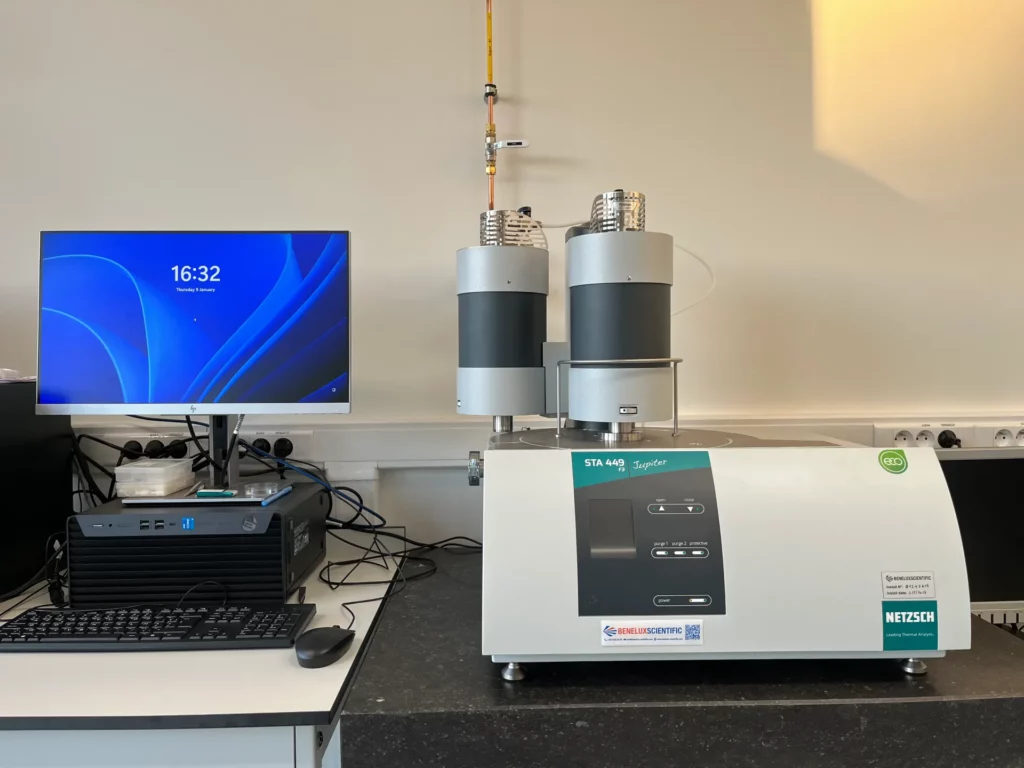
“The high sensitivity of the STA enables the detection of subtle thermal transitions, allowing reliable differentiation between various material types. When combined with thermogravimetric analysis (TG) and the magnetic transitions accessory for straightforward Curie-temperature determination, the system provides a valuable complement to a standalone DSC instrument.”
Team Materials Characterization & Testing at OCAS
The results: increased demand for advanced thermal analysis
Since installation, the interest in DSC and TG analyses within OCAS has increased substantially. The new system has been running continuously to meet growing internal demand for advanced thermal analysis measurements.
Although simultaneous thermal analysis is not intended for high-throughput quality control — as individual measurements require considerable analysis time — its primary value lies in deep research applications.
The enhanced sensitivity and multifunctional analysis capabilities enable:
- More precise material differentiation
- Improved understanding of phase transitions
- Accurate Curie temperature measurement
- More comprehensive material characterization
Over time, this contributes directly to improved steel products, optimized alloys, and expanded metallurgical expertise.verbeterde staalproducten, geoptimaliseerde legeringen en een uitbreiding van metallurgische expertise.
Why OCAS recommends Benelux Scientific
The initial learning curve with simultaneous thermal analysis (STA) was addressed proactively. Benelux Scientific organized advanced on-site training by NETZSCH, enabling the OCAS team to fully utilize the system’s capabilities, including DSC, thermogravimetric analysis (TGA), and Curie temperature determination.
A structured feedback session further optimized the commissioning process. Thanks to the proximity of a local supplier, communication was fast and after-sales support highly responsive.
“Benelux Scientific provides fast and reliable after-sales support, including coordination with Netzsch for instrument integration, organization of demonstration sessions and user training.”
Team Materials Characterization & Testing bij OCAS
OCAS values this combination of global NETZSCH technology and strong local technical support. The collaboration demonstrates Benelux Scientific’s commitment to long-term partnerships in advanced thermal analysis and material characterization.
For research centres and industrial R&D laboratories seeking high-sensitivity STA, DSC, or TGA solutions, this partnership shows how the right supplier makes a measurable difference.
Discover our material characterization solutions
More info
Advanced materials research requires accurate thermal analysis. Discover which solution suits your applications.